






.webp)
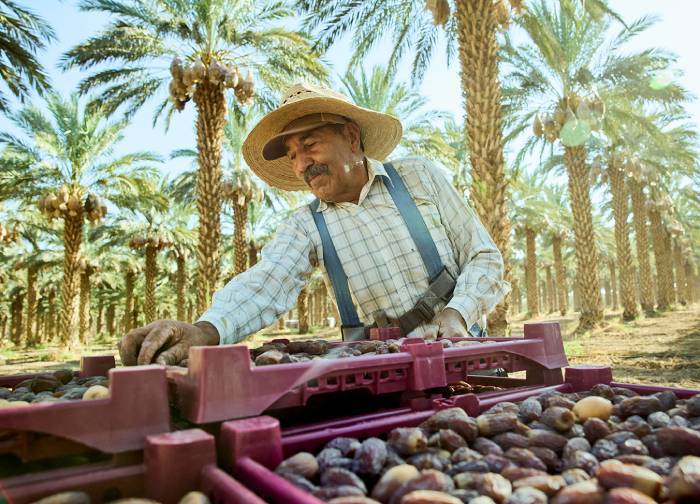
There are very few bees in the desert, which means our growers must pollinate the flowers of the date palm by hand. You could say they are busy bees of the human variety.
Medjool dates demand a lot of effort. And we’re here for it.
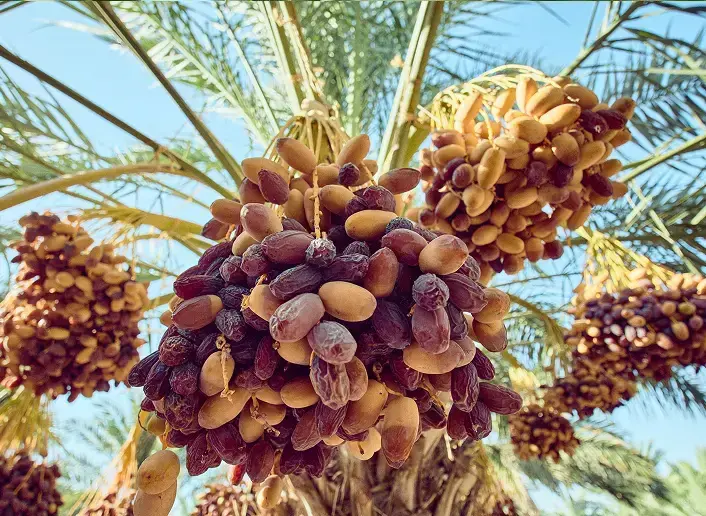
Every year, our Medjool dates need 100 days of 100º weather to come to sweet maturity.
But that’s not all they need. The date palms have to be trimmed and dethorned; pollination happens tree by tree, flower by flower, by hand and the maturing dates need to be netted (top and bottom). All these steps and quite a few more are taken to create just as many, perfect fruits as possible while keeping our Palmeros safe.
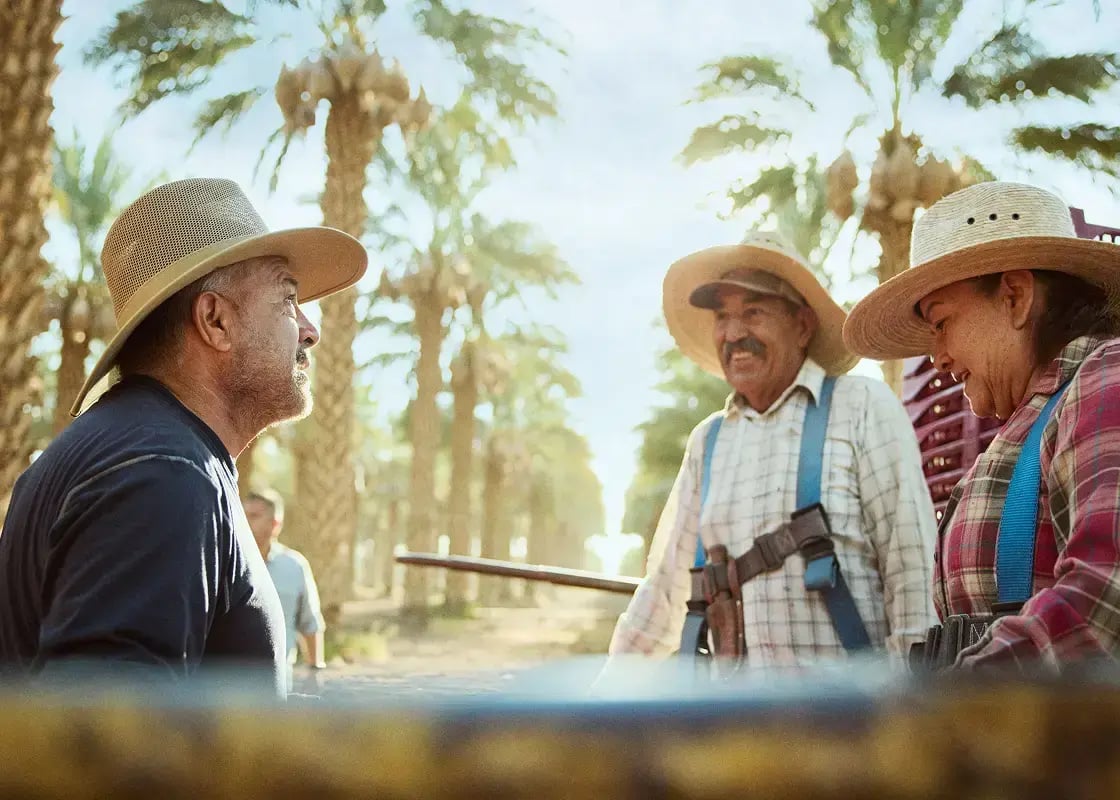

Who are the brave date-lovers who make this their life's work?
-
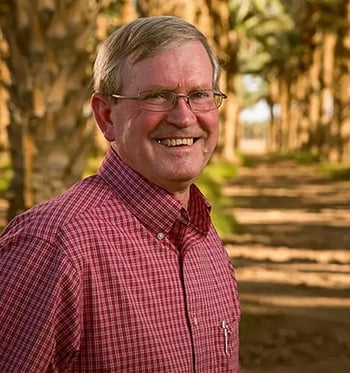
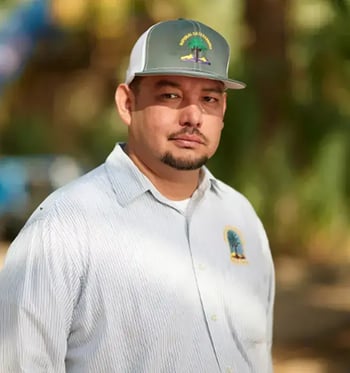
Brandon owl
Brandon is a third generation grower and learned by watching his grandfather’s passion for growing Medjool dates in the 70s. As a child, he would go into the groves with his grandfather and learn how to take care of the date palms and when he got older he was able to learn more about packaging and food safety which he took a big interest in. In 2008, Brandon returned to farming and saw the opportunity to continue the business that his grandfather created. He credits his passion for date growing to his grandfather’s dedication to the crop. He now takes the time to share with his own children the unique and special growing practices that take place in the Medjool date groves.
-
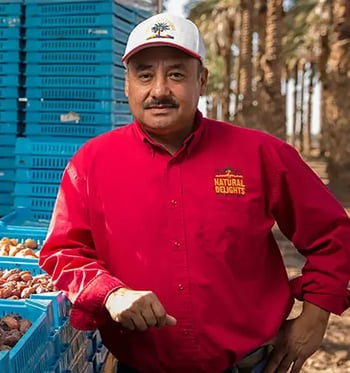
Gus Nunez
Gus Nuñez spent his younger years — and found his passion — helping his father, Isabel Nuñez, in the beautiful date gardens. For decades, the Nuñez family has worked to create one of the largest Medjool producing farms in the US, that employs thousands of people every year.
-
Melanie Alameda
Melanie is a fourth generation farmer with a rich family history in agriculture. The Almedas have been working the land since the 1920s, beginning in Central California and eventually moving down to Bard Valley. One of Melanie’s favorite things about growing Medjool dates is that they are not only rich in flavor, but also in history. She loves growing fresh fruit that can be used a million different ways and she brings great vision to the Natural Delights team of growers. A fun fact about Melanie is that she also studied Opera in school and was part of the San Francisco Opera Company before becoming a full time grower. She continues to sing and perform, but her stage is now a vast grove of date palms.
-
Scott Shadle
The Shadle Group has been part of the Bard Valley Medjool date family since 1968, when Yuma attorney and farmer Stephen Shadle purchased one of the area’s original 40-acre Medjool date farms. Inspired by early industry innovators like Enice Rice, Stephen believed in collaboration, innovation, and sharing ideas to strengthen the entire Medjool date industry. Over the years, the Shadle Group expanded its farming operation and became an important part of the growth of Bard Valley’s date industry. In 2003, the group helped establish Datepac, with Dave Nelson serving as its first CEO, while farming operations continued to grow under the leadership of experienced local growers. Today, under the leadership of Scott Shadle, the Shadle Group farms nearly 900 acres in Bard Valley and operates Grower Direct, a leading palm-selling business that supports local date growers through orchard renewal and sustainable farm management. The Shadle Group also remains committed to the principles that helped shape the Bard Valley Medjool date industry: cooperation, innovation, and the belief that growers are stronger when they work together. Stephen Shadle was instrumental in helping establish the Bard Valley Date Growers Association, and his legacy continues through the group’s dedication to the growers and communities that make Bard Valley Medjool dates possible.
-
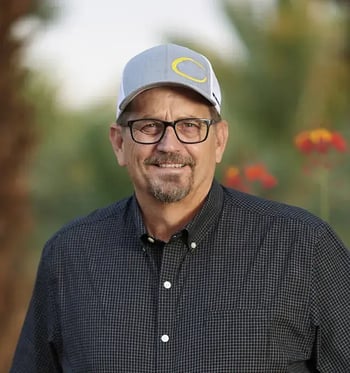
Dave Nelson
Dave embodies the character of a dedicated farmer. His passion for Medjool dates, the soil, and the purity of the farming life run deep, going back to his teen years working at a Bard Valley date ranch. In 1975, using his car as collateral, Dave and his brothers scraped together a down payment for their own date grove. Realizing the power of teamwork, the Nelson Brothers would become founding members of the Bard Valley Date Growers Association.
-
Ty Cox
Ty has been growing dates for more than a decade, learning from his father Ord and the many generations of farmers in his family before him. When he was a child, Ty would follow his father closely in the date groves and learned how to plant and take care of the date palms. After farming several other crops throughout his adulthood, Ty decided to take over the family date business in 2008. One of his favorite things about growing dates is that every year is different and there’s a constant evolution of growing techniques and innovation.
-
Mat Watkins
Mat has been growing Medjool dates for 10 years, building his experience alongside his family’s citrus farming operation. Married with three daughters, Mat values the opportunity to work in agriculture and be part of a growing industry. For Mat, growing Medjool dates is especially rewarding because of the focus on producing healthy, high-quality fruit and the strong sense of collaboration throughout the industry. Year after year, that commitment to growing healthy fruit and contributing to an industry on the rise keeps him coming back to the farm.Today, Mat is proud to be part of a family that works together, continues to grow, and looks toward an exciting future.
Each Medjool date takes
many trips up the tree.
Our date palms are up to 60 feet tall — that’s like a 5-6 story building. And every growing and harvesting season, our Palmeros must make nearly a dozen trips up each of our 15,000 trees. What do they do on each of those climbs? Have a look.
-
1. Dethorning
Our Palmeros remove sharp thorns from the base of each frond using a curved machete. This reduces hazards and helps prepare the crown.
-
2. Pollinating
To ensure fruit production, pollen from male flowers is applied by hand to each female flower.
-
3. Fruit arm training and positioning
Newly emerging fruit stalks (fruit arms) naturally grow upward. We carefully bend each fruit arm to point down.
-
4. Fruit bunch trimming
The center part of the fruit bunch is removed allowing air circulation.
-
5. Firm tying fruit arms
As the fruit grows and becomes heavy, we tie each fruit arm to a palm frond for extra support.
-
6. Fruit thinning
Mainly in Medjool date farms, fruit thinning optimizes the growth of each date.
-
7. Bagging fruit bunches (step 1)
While the fruit is still green, a mesh bag is placed around each bunch and secured at the top to protect the fruit from local wildlife.
-
8. Bagging fruit bunches (step 2)
As the fruit ripens, we return to tie the bottom and prevent ripe fruit from falling to the ground.
-
9. Harvest
Ripe Medjool dates are picked while unripe fruit is left until it matures. Our Deglet Noor dates are harvested by removing each entire fruit arm.
-
10. Trimming fronds and fruit arms
At the end of the harvest, we trim lower fronds and remove fruit arms that no longer bear fruit to maintain the palm crown.
And we’re ready to start all over again next season.