
How Cultures Around the World Celebrate Holidays with Medjool Dates
The holiday season is all about family, tradition, and, of course, delicious food. One of my favorite ways to explore a culture is to travel by plate, whether that means trying a new restaurant or seeing what’s on a family’s holiday table. And one ingredient that shows up again and again around the globe is Medjool dates, in everything from savory dishes and desserts to drinks.
As a registered dietitian nutritionist who is half Austrian and half Persian, I grew up with dates woven into holiday celebrations on both sides of my family. Over the last decade, my husband, whose parents are from India, has introduced me to Hindu celebrations, many of which feature Medjool dates, too.
Ahead, I’m taking you on a trip through the three holidays I know best, Diwali, Christmas in Austria, and Nowruz, to show how dates show up on holiday tables around the world.
Diwali - The Festival of Lights
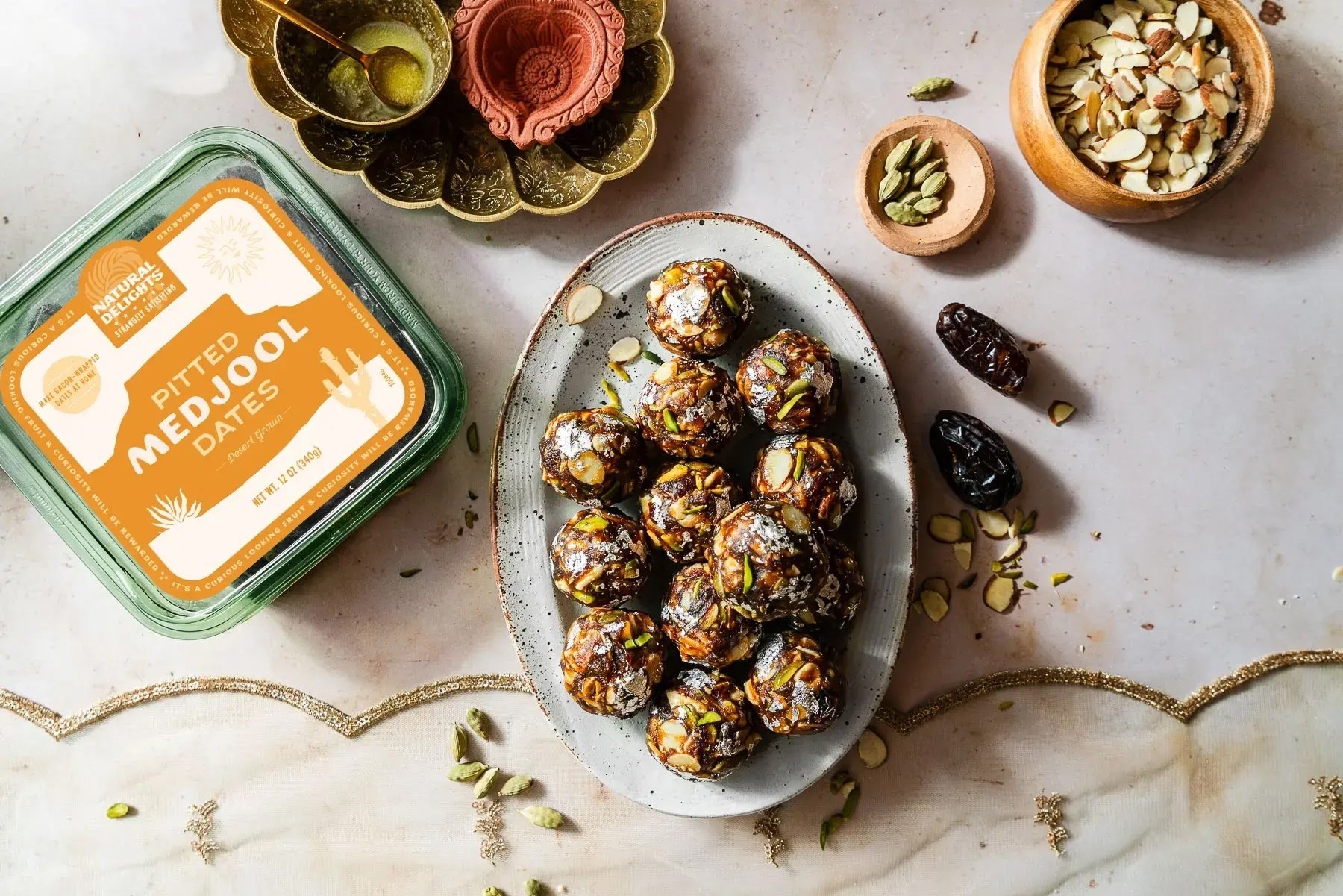 Diwali, the festival of lights, is celebrated each fall by more than a billion people in India, Nepal, Malaysia, Sri Lanka, and beyond. The holiday welcomes light, prosperity, and happiness into the home, and food is at the heart of the celebration. Medjool dates appear in many Diwali dishes, from savory chaat (a popular street-food snack) and chutney (a condiment) to sweets like ladoo (round confections), kheer (rice pudding), and halwa (a dense, sweet pudding).
Chaat hits every flavor and texture note: crunchy, salty, tangy, and sweet. There are countless varieties, and one of my favorites is papdi chaat. It starts with a base of crunchy crackers topped with chickpeas, diced potatoes, and yogurt, then drizzled with two chutneys: mint and tamarind-date. Next comes a sprinkle of chaat masala, a tangy spice blend of dried mango powder, cumin, coriander, chili, and ginger. It’s finished with fresh cilantro, pomegranate arils, and sev, crunchy bits of fried chickpea-flour dough that act almost like croutons for your chaat.
For dessert, you’ll find ladoo in almost every sweet box gifted to friends and family on Diwali. Some are made with chickpea flour, ghee, sugar, and cardamom, while others use coconut. Date and nut ladoo are naturally sweetened. The dates add sweetness without added sugar, and their sticky texture binds the nuts, seeds, and cardamom together into a poppable, nutritious treat.
Beyond sweetness, dates also provide fiber, a nutrient most Americans don’t get enough of. Fiber helps slow digestion, which supports steady, long-lasting energy instead of a blood sugar spike and crash. Dates also offer important micronutrients, including potassium, copper, and magnesium.
Christmas in Austria
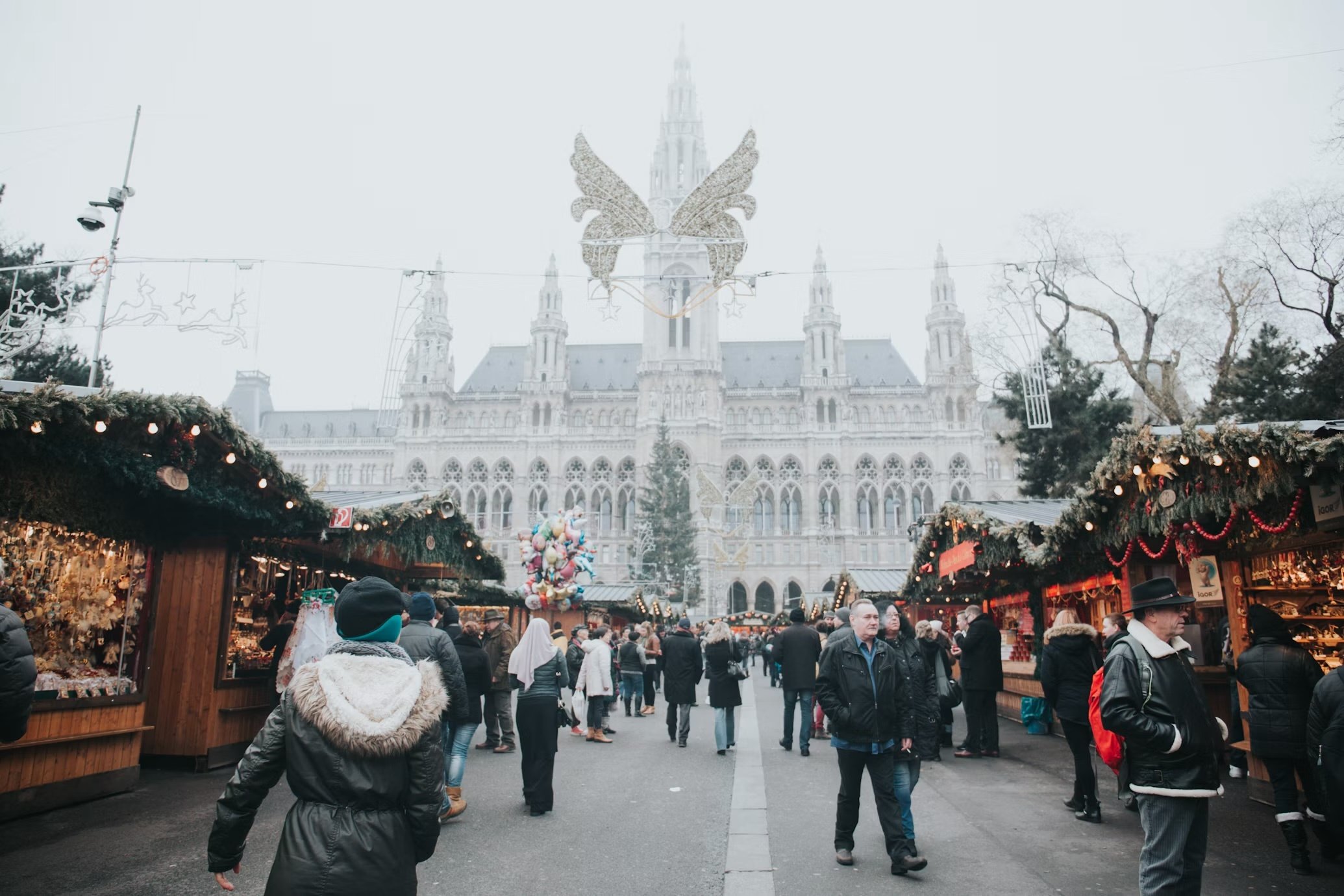 Christmas is celebrated all over the world, but my holiday memories are rooted in Austria, where my mom is from. Christmas time in Austria is filled with festive Christmas markets, Advent calendars, and mugs of Glühwein (warm spiced wine) or Eierlikör (a creamy egg liqueur similar to eggnog). One of my favorite Austrian traditions is holiday baking. Families make a variety of cookies and pastries, like Vanillekipferl (crescent-shaped vanilla nut cookies), Kokosbusserl (coconut macaroons), and Linzer Sterne (star-shaped nut shortbread sandwich cookies filled with jam), and pack them into gift boxes for friends and family.
Dates most often appear in fruit breads, cakes, cookies, and other pastries. One of the most popular is Früchtebrot, a dense fruit bread packed with nuts like hazelnuts and walnuts and dried fruits like dates, plums, and apricots. Dates add moisture and natural sweetness to every bite. It’s often served by the slice with a cup of coffee or tea throughout the holiday season.
You’ll also find dates in apple-date strudel, a variation on the beloved Austrian pastry, as well as marzipan- or almond-stuffed dates and fruit balls made from dates and ground nuts. In many of these recipes, date paste can stand in for refined sugar, adding natural sweetness, a caramel-like flavor, and a soft, chewy texture.
Nowruz - The Persian New Year
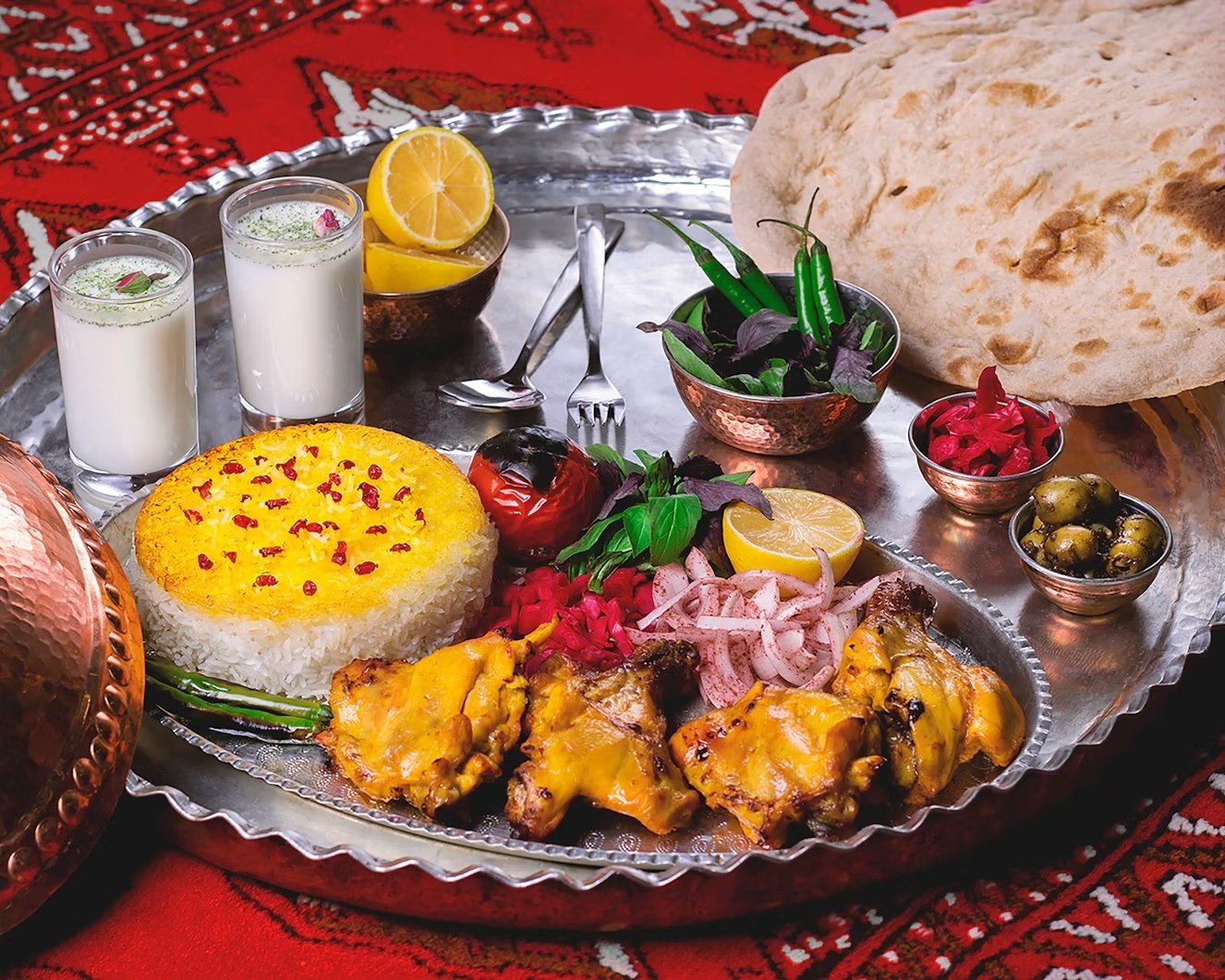 Nowruz, the Persian New Year, begins on the first day of spring and is celebrated by millions of people in Iran, Afghanistan, Central Asia, and beyond. The holiday is all about renewal, and food plays a starring role. Rice is a staple of Persian cooking, often studded with nuts and dried fruits like dates and raisins and spiced with saffron. You’ll also find hearty stews filled with meat, fresh herbs, beans, and lentils, sometimes studded with dried fruit like dates and pomegranate molasses.
One dish often served around Nowruz is reshteh polo, rice layered with toasted noodles, caramelized onions, dates, and raisins, and seasoned with saffron and cinnamon. Every bite is a mix of sweet and savory, and the noodles are said to symbolize good fortune for the year ahead.
For something sweet, there’s ranginak, a traditional Persian dessert of walnut-stuffed dates covered in a toasted flour-and-butter mixture spiced with cinnamon and cardamom. It’s finished with chopped pistachios and sometimes coconut or dried rose petals.
Travel the World Through Your Plate This Holiday Season
Whether you’re celebrating Diwali, Christmas, Nowruz, or your own celebrations, Medjool dates are a delicious way to explore new cultures without leaving your kitchen. They add a caramel-like flavor, chewy texture, and natural sweetness, so there’s less need to rely on added sugar. They also deliver important nutrients, including fiber, which most of us don’t get enough of, especially around the holidays. So this year, try adding dates to your own holiday table, whether it’s in a ladoo, a slice of Früchtebrot, or a plate of ranginak.
________________________________________________

Roxana Ehsani, MS, RD, CSSD, LDN is a Registered Dietitian Nutritionist and Board-Certified Sports Dietitian working as a nutrition consultant and media and brand spokesperson. She's a contributing writer for EatingWell, a recipe developer for Lose It/Everyday Health. She is frequently quoted in national media and seen on-air on TV stations nationwide. Roxana brings deep sports nutrition expertise, as she's an adjunct professor of sports nutrition at Virginia Tech and the sports RD for professional sports teams. A trilingual, lifelong, and former collegiate athlete, Roxana spends her free time creating recipes, running, and traveling the world.